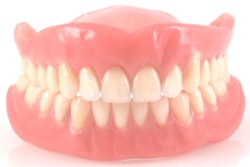
Tooth loss may be linked to cognitive decline in older adults, potentially leading to damage in brain regions critical for memory formation and retention even when they maintain good nutrition, according to a news release from Hiroshima University in Japan.
Furthermore, tooth loss may contribute to declines in cognitive function even when the diet is well balanced with ample amounts of protein, according to the release dated December 27.
“It is surprising that a peripheral event in the mouth can so profoundly affect the central nervous system,” Rie Hatakeyama, a postdoctoral researcher at the university and lead author of the study, said in the release.
To examine how nutrition and chewing ability affect brain health, researchers used aging-prone male mice and divided them into four groups. The groups included mice on a normal-protein diet with no tooth extraction, a low-protein diet with no extraction, molar extraction with a normal-protein diet, and molar extraction with a low-protein diet.
After six months, the mice completed behavioral tests to assess memory and cognition. Additionally, researchers analyzed brain tissue for signs of inflammation, neuronal loss, and gene expression related to cell death. The findings showed that mice with molar loss experienced significant memory decline, even when their diet matched that of control animals.
There was no interaction between tooth loss and a low-protein diet in the Bax/Bcl-2 mRNA ratio, a marker of cell survival versus cell death. Instead, tooth loss alone significantly increased this ratio, indicating heightened pro-cell death activity in the brain.
Also, tooth loss triggered inflammation and neuronal loss in the CA1, a critical part of the hippocampus that mostly consists of pyramidal neurons necessary for forming and retrieving detailed memories and conscious awareness, and dentate gyrus regions of the hippocampus, which are critical for memory formation and storage. In contrast, the low-protein diet affected only the CA3 region, a subfield of the hippocampus that operates as an attractor network for storage and pattern completion.
In the future, the researchers plan to further investigate how chewing influences brain function by examining changes in hippocampal activity, neurotransmitters, and neurogenesis.
“Our ultimate goal is to demonstrate, in humans, that maintaining or restoring mastication through prosthodontic treatment can help prevent or delay cognitive decline in the elderly,” Hatakeyama said.